Grouting
Permeation Grouting
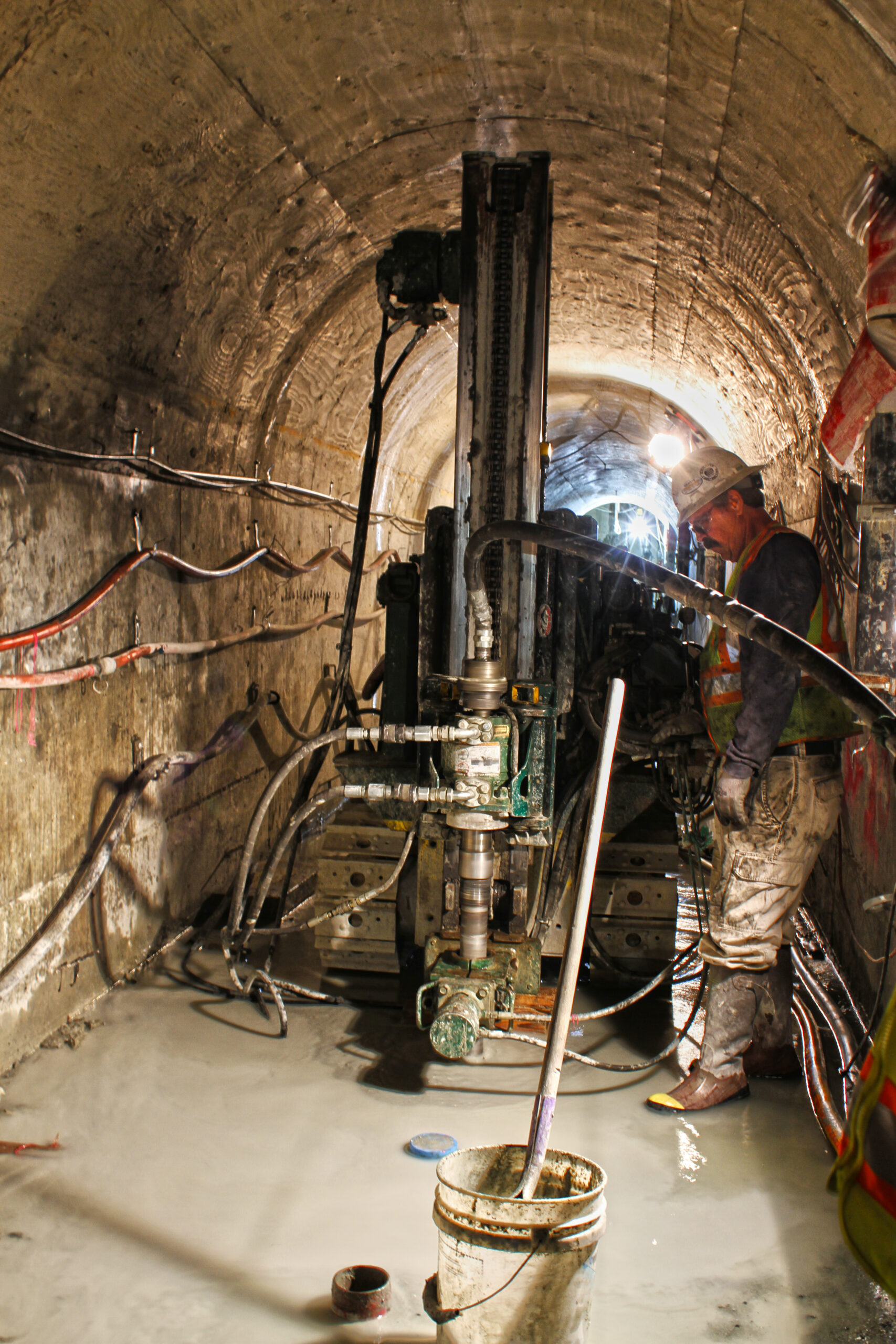
Permeation grouting is the pressurized injection of a cement-based grout into the ground to improve soil strength, reduce soil permeability, and stabilize loose soil. This process involves drilling holes into the designated area to intercept cracks, voids, joints, fractures, and fissures that need to be filled. A grout mix of cement, water, and special additives is then pressure-pumped through the drilled holes to permeate the surrounding ground.
Permeation Grouting Applications
Loose Gravel & Shot Rock Stabilization
Tunnel Lining Voids Grouting
Fractured Rock Treatment for Dam Foundations
Sealing & Cutoff Grouting
Compaction Grouting
Compaction grouting stabilizes weak soil strata by replacing natural soil with grout, which results in dense, strengthened ground conditions. Stiff grout is pumped through a driven or drilled casing in stages to form grout bulbs, which displace and densify surrounding soils
Compaction Grouting Applications
Existing Foundation Soil Stabilization
Settlement Control
Structural Re-Leveling
Sinkhole Remediation
Void Filling
Injection Grouting
Injection grouting refers to three different types of grouting, all which involve the pressurized injection of cement- or chemical-based grout to improve strength, reduce permeability, stabilize existing soil, and fill voids. Permeation grouting is used for granular soils; our teams inject a low-viscosity grout into the ground to penetrate and fill the spaces between soil particles. Rock grouting is injected under controlled pressure into fractures, joints, and cracks within a rock mass to form grout curtains or cutoffs. Contact grouting fills voids or gaps between existing structures and the surrounding ground to increase stability.
Injection Grouting Applications
Loose Soil & Rock Stabilization
Tunnel Lining & Annular Void Filling
Fractured Rock Treatment for Dams & Foundations
Groundwater Seepage Control